


-
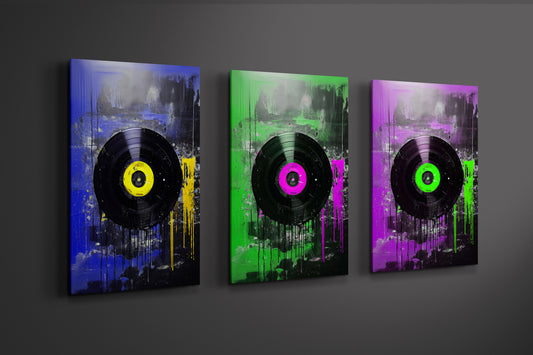
Triptych Vinyl Record Wall Art – 3-Piece Music Print, Framed Poster or Aluminium Print
Regular price From €150,00 EURRegular price -
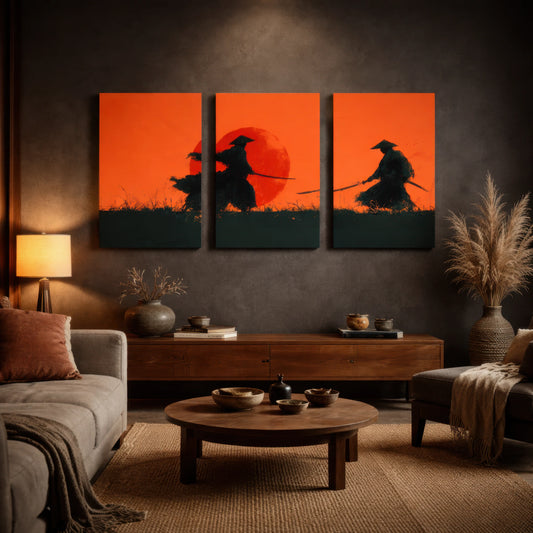
Crimson Duel – Samurai Battle Triptych Wall Art
Regular price From €155,00 EURRegular price -
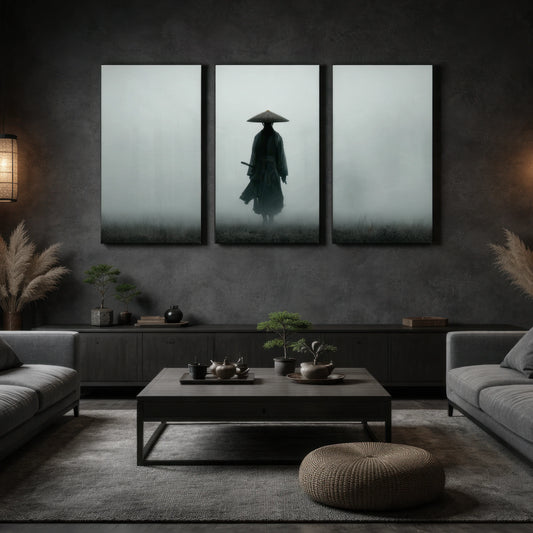
Silent Ronin Mist – Japanese Samurai Triptych Wall Art
Regular price From €155,00 EURRegular price -
Pagoda Sunset Bridge – Japanese Temple Landscape Triptych Wall Art
Regular price From €155,00 EURRegular price -
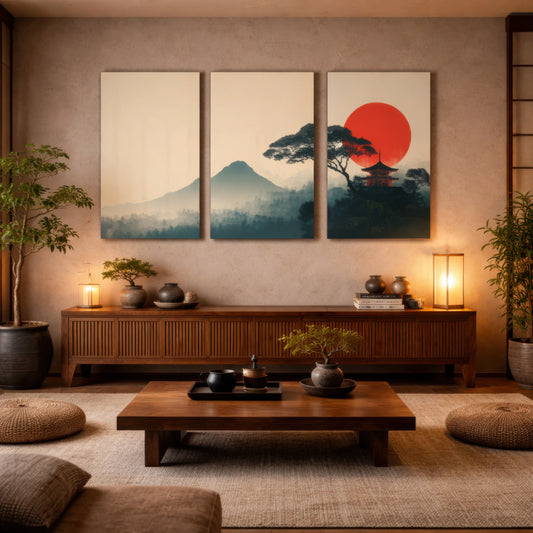
Temple Sunrise Horizon – Japanese Pagoda Landscape Triptych Wall Art
Regular price From €155,00 EURRegular price -
Fuji Sunset Lake – Japanese Mount Fuji Triptych Wall Art
Regular price From €155,00 EURRegular price -
Red Sun Horizon – Japanese Landscape Triptych Wall Art
Regular price From €155,00 EURRegular price -
Golden Crane Garden – Japanese Crane Triptych Wall Art
Regular price From €155,00 EURRegular price -
Sakura River Path – Japanese Cherry Blossom Garden Triptych Wall Art
Regular price From €155,00 EURRegular price -
Red Sakura Sunset – Japanese Cherry Blossom Landscape Triptych Wall Art
Regular price From €155,00 EURRegular price -
Sakura Sunrise Landscape – Japanese Cherry Blossom Triptych
Regular price From €155,00 EURRegular price -
Sakura Blossom Branch – Japanese Cherry Blossom Triptych Wall Art
Regular price From €155,00 EURRegular price -
Autumn Maple Geisha – Japanese Kimono Portrait Triptych Wall Art
Regular price From €155,00 EURRegular price -
Sakura Portrait Geisha – Japanese Modern Illustration Triptych
Regular price From €155,00 EURRegular price -
Rising Sun Geisha – Japanese Ink & Calligraphy Triptych Wall Art
Regular price From €155,00 EURRegular price -
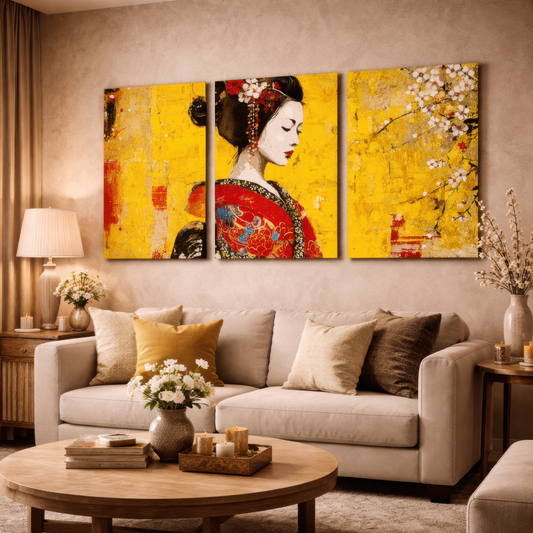
Golden Sakura Geisha – Japanese Gold Portrait Triptych Wall Art
Regular price From €155,00 EURRegular price -
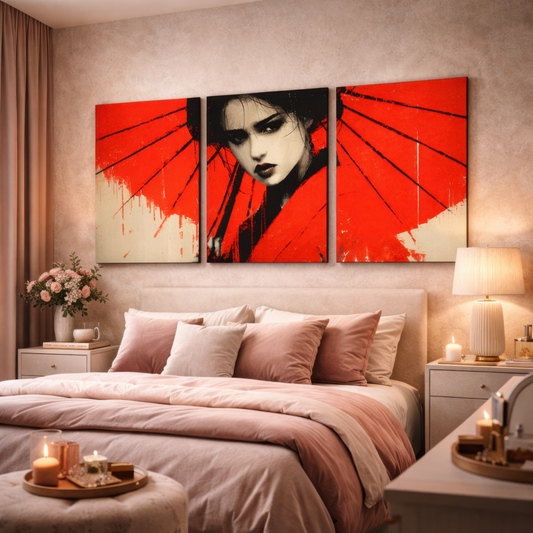
Vermilion Umbrella Geisha – Japanese Graphic Triptych Wall Art
Regular price From €155,00 EURRegular price -
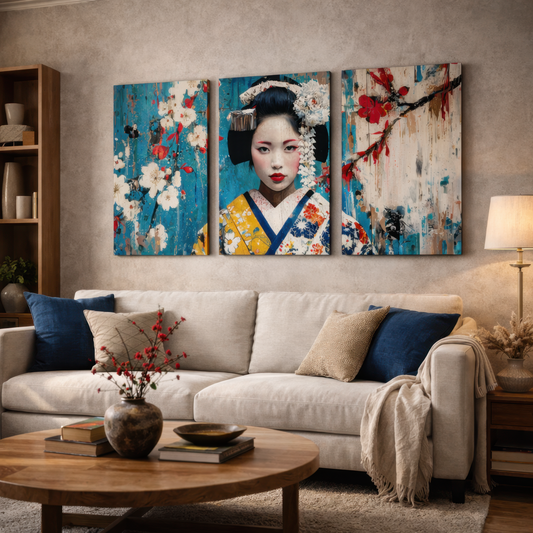
Crimson Sakura Geisha – Japanese Cherry Blossom Triptych Wall Art
Regular price From €155,00 EURRegular price -
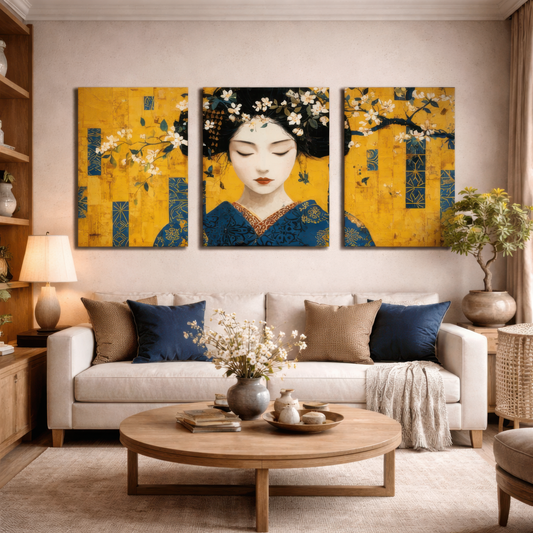
Japanese Geisha Gold Blossom – Traditional Wall Art Triptych
Regular price From €155,00 EURRegular price -
Marble Botanical Garden – Floral Acrylic Glass Triptych
Regular price From €280,00 EURRegular price









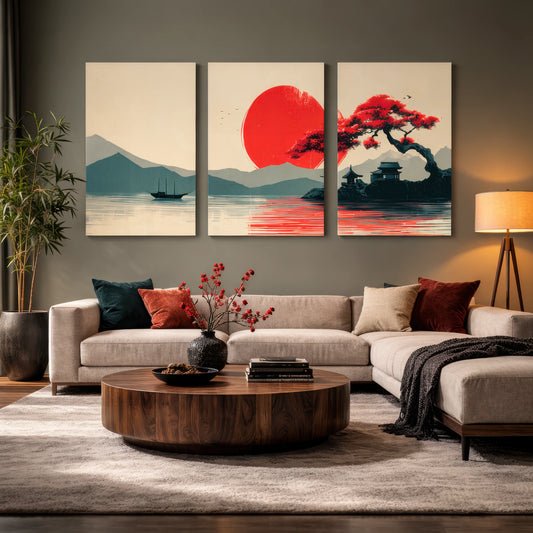

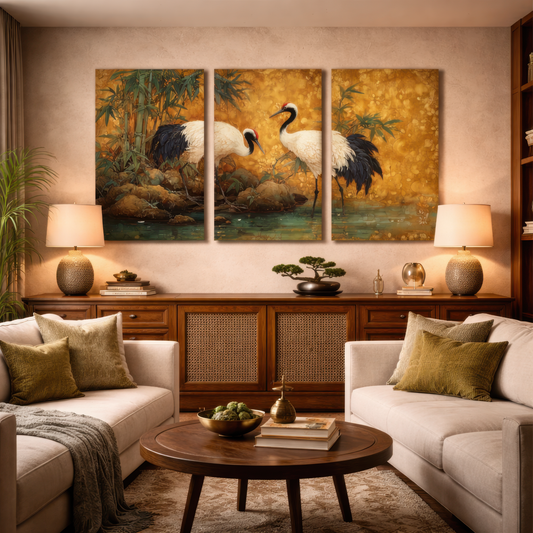

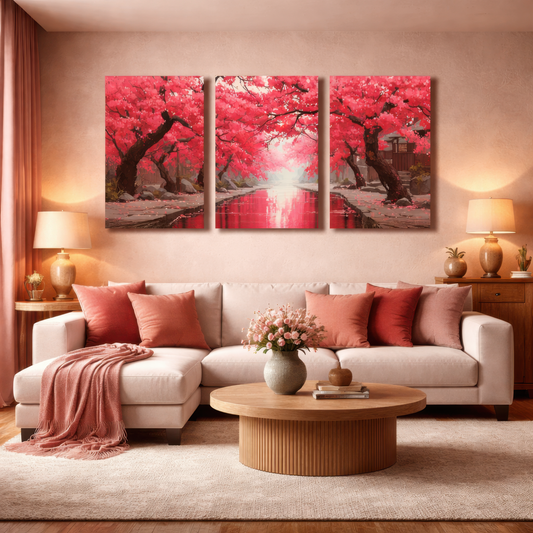

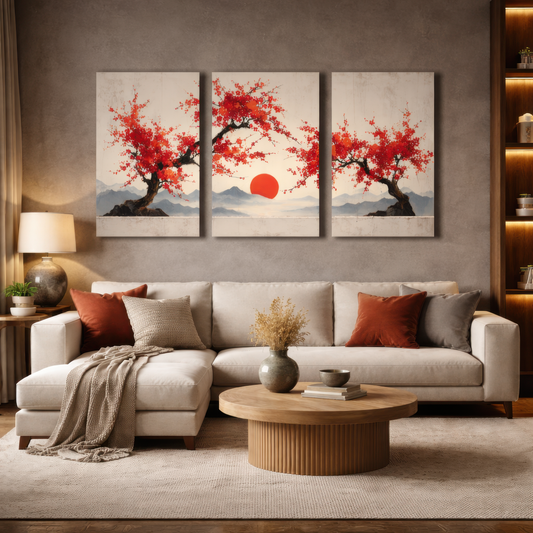

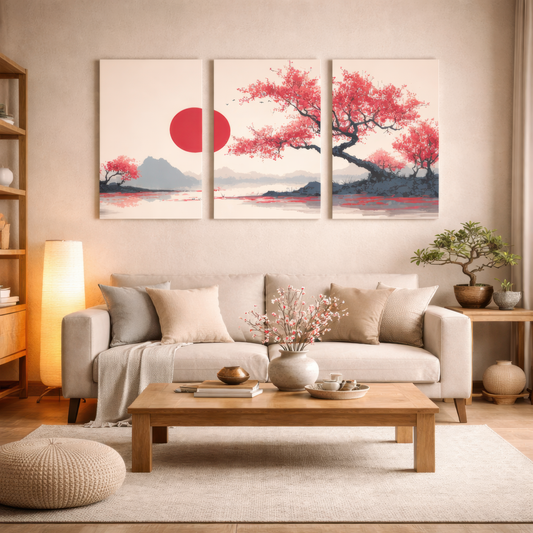

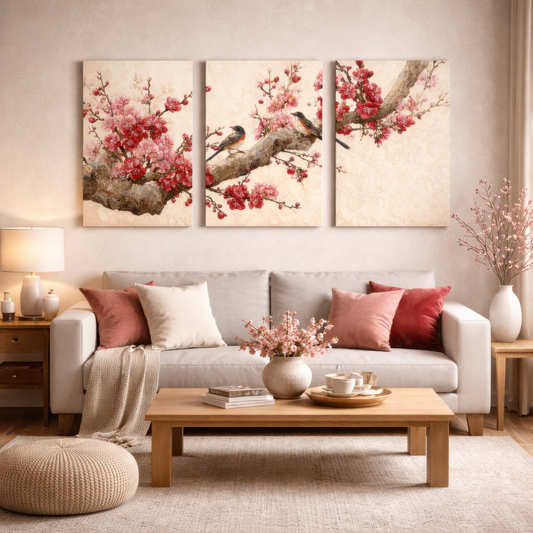

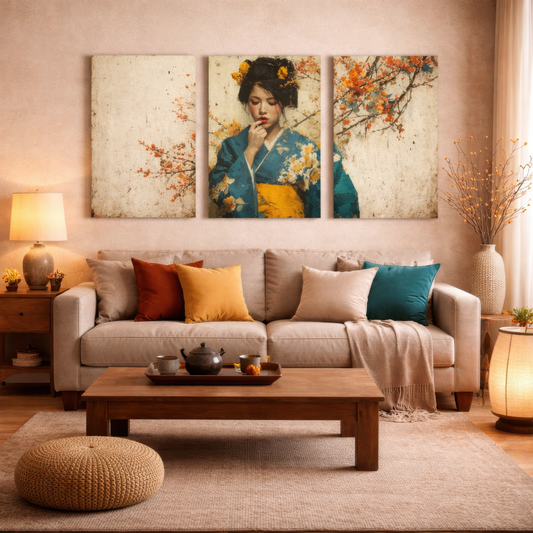



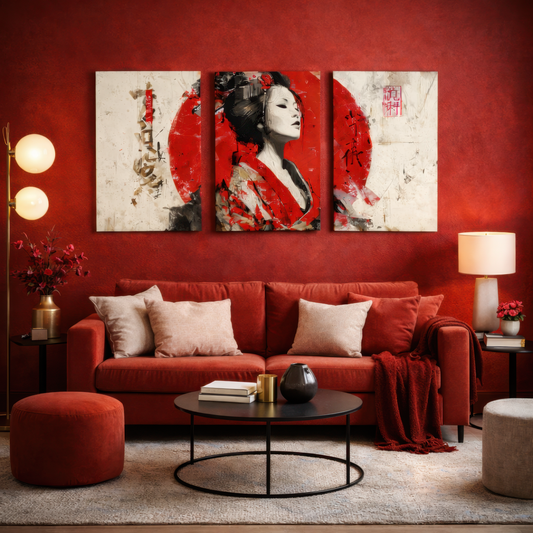






What is triptych wall art?
How far apart should triptych panels be?
Why choose triptych wall art over a single panel?
Triptych Wall Art

Abstract Triptych
Multi-panel abstract compositions built on colour balance and form. Distributes visual rhythm across wider spaces.
Architectural Triptych
Perspective-driven layouts extended across three panels. Reinforces structure and spatial alignment.
Japanese Triptych
Cultural compositions translated into balanced multi-panel formats. Combines detail with controlled negative space.
Minimal Triptych
Reduced compositions focused on proportion and spacing. Designed for calm, structured interiors.
Materials & Craftmanship
Every piece is produced on premium substrates selected for structural stability and controlled visual output. Non-brushed aluminum delivers a clean, matte-satin surface with sharp detail and minimal glare. Acrylic glass increases depth and color intensity through a polished, high-gloss finish. Metal framed museum-quality posters offer a refined, softer presentation with a balanced framed profile. Each format is defined to match lighting conditions, spatial composition, and viewing distance.

Choose Your Finish
Non-Brushed Aluminum Print
A rigid aluminum composite with a smooth matte-satin surface. Provides sharp detail, controlled reflection, and a stable architectural finish suited to minimalist interiors.
Acrylic Glass Print
A high-gloss surface that enhances color intensity and perceived depth. Edges catch light, creating a more dynamic and luminous visual effect.
Metal Framed Museum Quality Poster
Archival matte paper housed in a slim metal frame. Produces a softer visual output with a defined border, suited to structured and gallery-style layouts.
Where Triptych Wall Art Works Best

Why Choose Triptych Wall Art?
Three panels, one soul. Triptychs provide a grand narrative that single panels cannot achieve, adding architectural depth and a contemporary edge to large wall spaces.


