


-
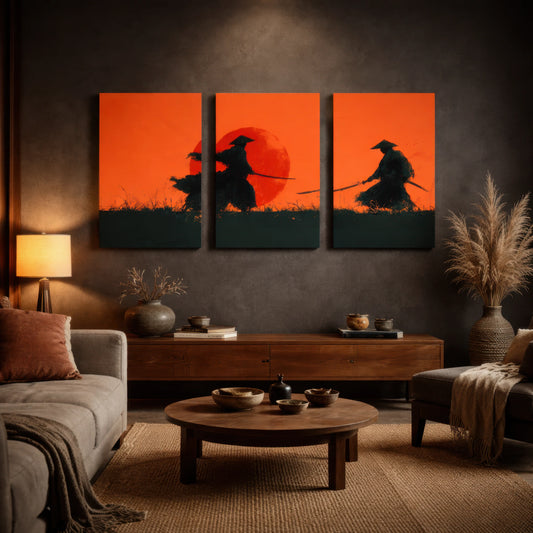
Crimson Duel – Samurai Battle Triptych Wall Art
Regular price From €155,00 EURRegular price -
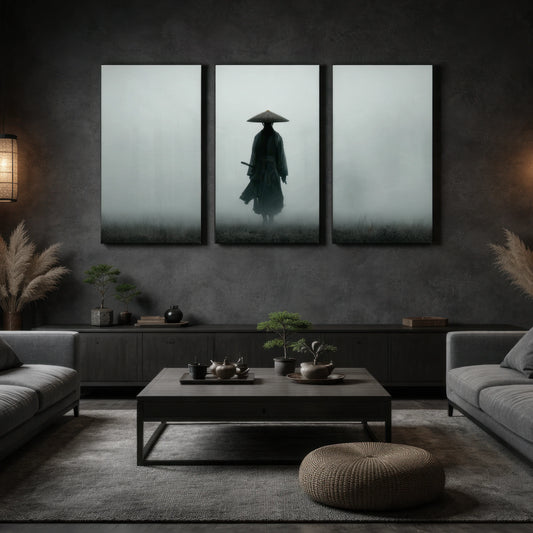
Silent Ronin Mist – Japanese Samurai Triptych Wall Art
Regular price From €155,00 EURRegular price -
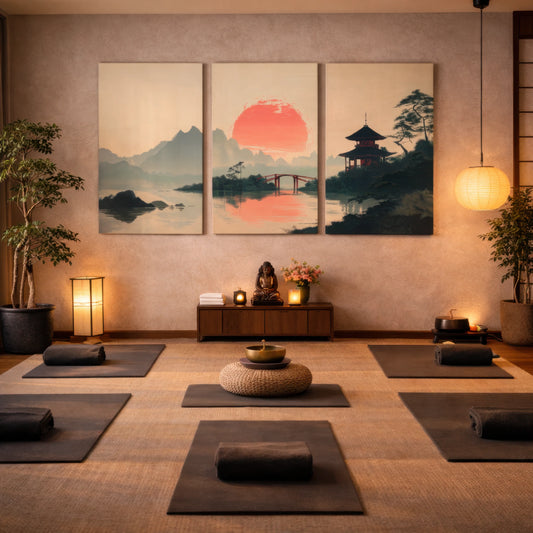
Pagoda Sunset Bridge – Japanese Temple Landscape Triptych Wall Art
Regular price From €155,00 EURRegular price -
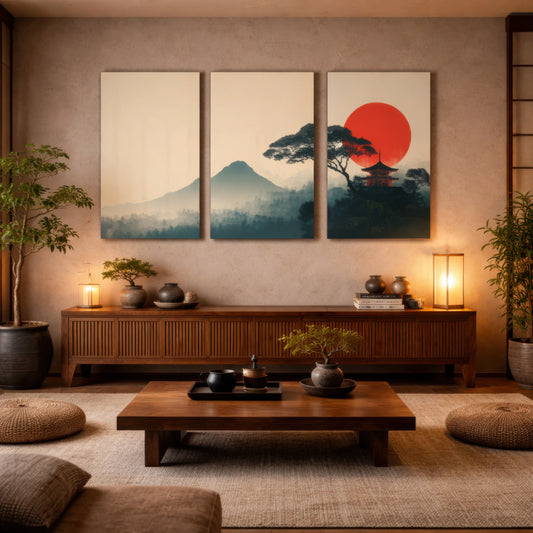
Temple Sunrise Horizon – Japanese Pagoda Landscape Triptych Wall Art
Regular price From €155,00 EURRegular price -
Fuji Sunset Lake – Japanese Mount Fuji Triptych Wall Art
Regular price From €155,00 EURRegular price -
Red Sun Horizon – Japanese Landscape Triptych Wall Art
Regular price From €155,00 EURRegular price -
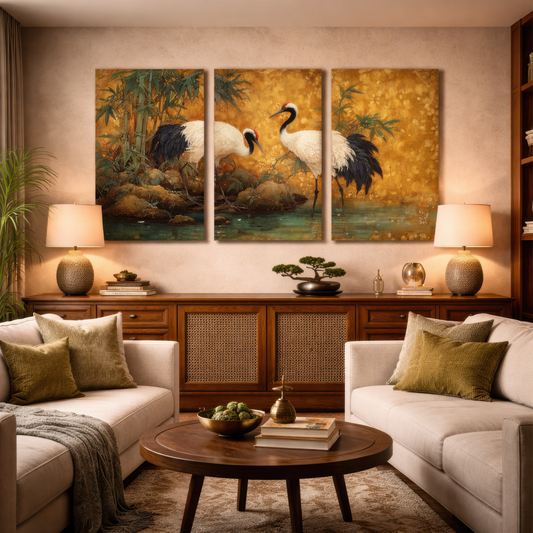
Golden Crane Garden – Japanese Crane Triptych Wall Art
Regular price From €155,00 EURRegular price -
Sakura River Path – Japanese Cherry Blossom Garden Triptych Wall Art
Regular price From €155,00 EURRegular price -
Red Sakura Sunset – Japanese Cherry Blossom Landscape Triptych Wall Art
Regular price From €155,00 EURRegular price -
Sakura Sunrise Landscape – Japanese Cherry Blossom Triptych
Regular price From €155,00 EURRegular price -
Sakura Blossom Branch – Japanese Cherry Blossom Triptych Wall Art
Regular price From €155,00 EURRegular price -
Autumn Maple Geisha – Japanese Kimono Portrait Triptych Wall Art
Regular price From €155,00 EURRegular price -
Sakura Portrait Geisha – Japanese Modern Illustration Triptych
Regular price From €155,00 EURRegular price -
Rising Sun Geisha – Japanese Ink & Calligraphy Triptych Wall Art
Regular price From €155,00 EURRegular price -
Golden Sakura Geisha – Japanese Gold Portrait Triptych Wall Art
Regular price From €155,00 EURRegular price -
Vermilion Umbrella Geisha – Japanese Graphic Triptych Wall Art
Regular price From €155,00 EURRegular price -
Crimson Sakura Geisha – Japanese Cherry Blossom Triptych Wall Art
Regular price From €155,00 EURRegular price -
Japanese Geisha Gold Blossom – Traditional Wall Art Triptych
Regular price From €155,00 EURRegular price -
Japanese Geisha Triptych Wall Art – Acrylic Glass or Metal Framed Poster
Regular price From €155,00 EURRegular price













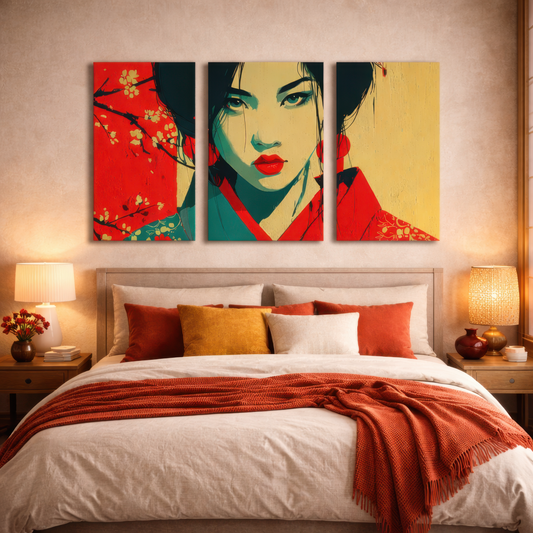

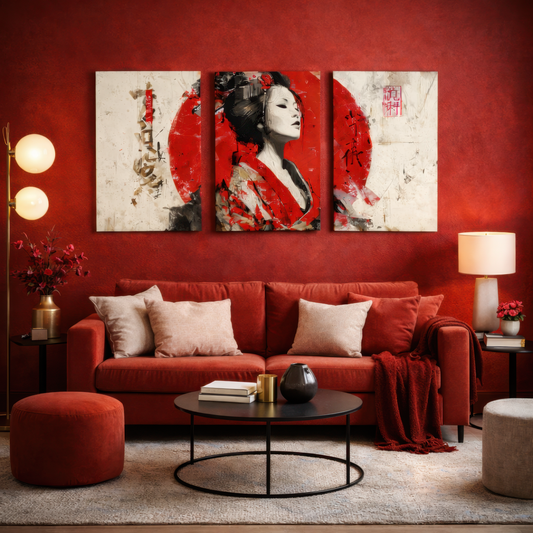

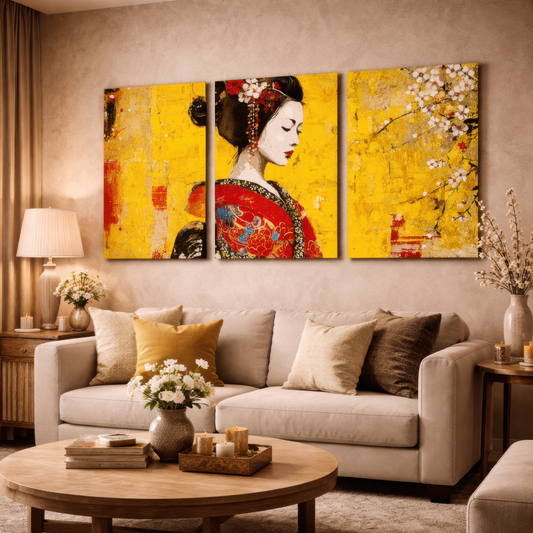

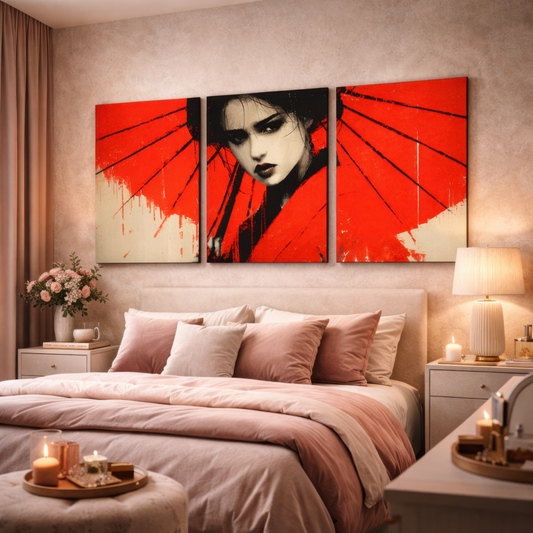

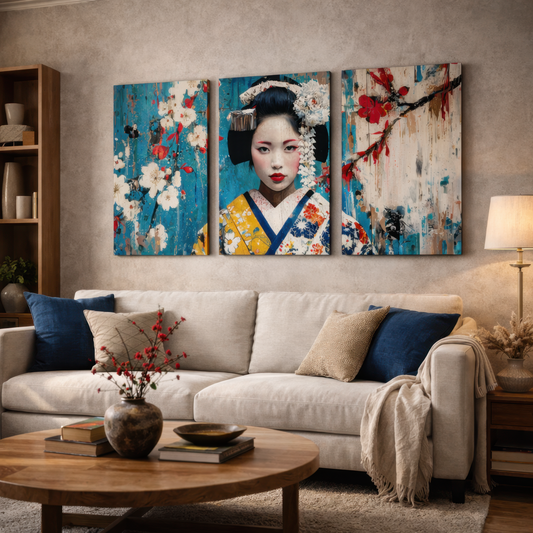

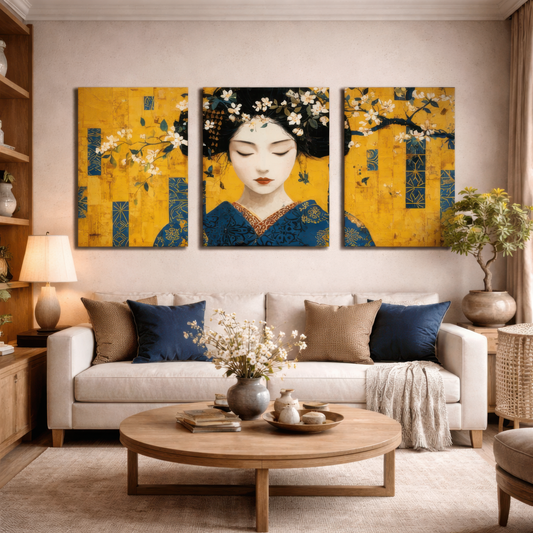

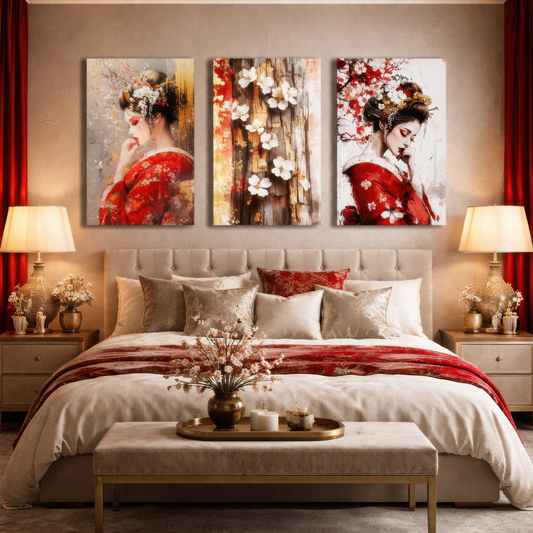
What is Japanese wall art?
What interior style works best with Japanese wall art?
Where should Japanese wall art be placed?
Japanese Wall Art Themes: Geisha, Samurai, Cherry Blossom & Mount Fuji

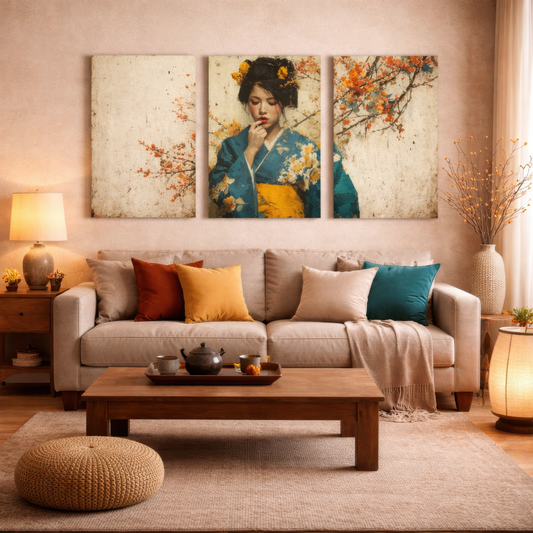
Geisha
Portrait-based compositions with refined color control and vertical balance. Suitable for interiors that require a calm focal point without visual noise.
Samurai
High-contrast compositions with strong directional movement. Suitable for statement placement where sharper structure and visual weight are required.
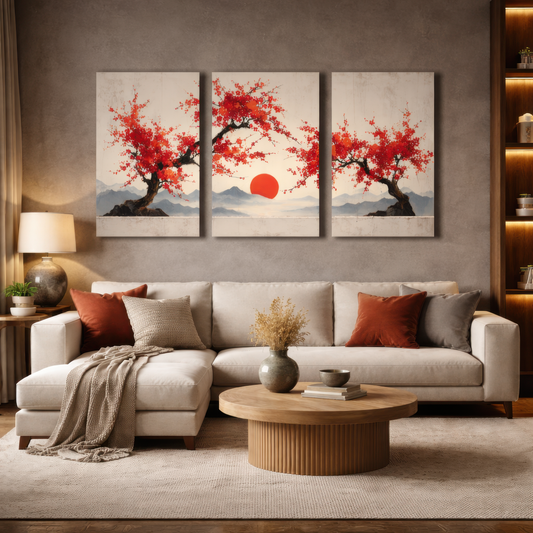
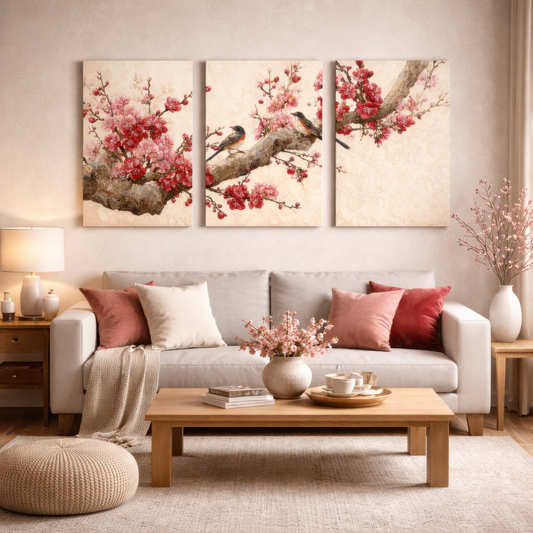
Cherry Blossom
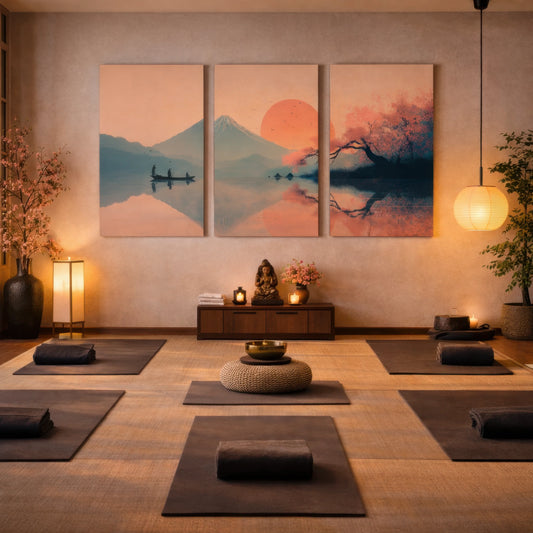
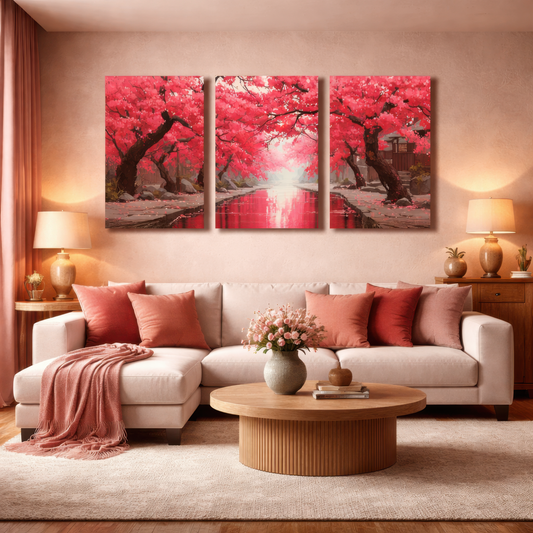
Repetitive organic forms with softer contrast and lighter tonal range. Suitable for Japandi and minimalist interiors that prioritize calm and continuity.
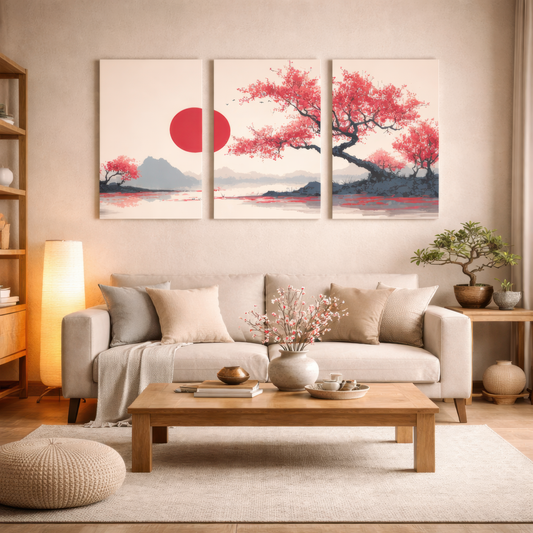
Mount Fuji
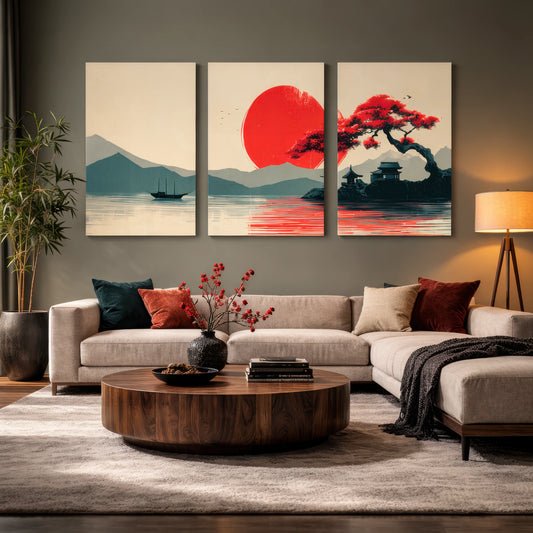
Landscape compositions built around horizon lines and depth layering. Suitable for anchoring wide walls and reinforcing spatial balance.
Materials & Craftmanship
Every piece is produced on premium substrates selected for structural stability and controlled visual output. Non-brushed aluminum delivers a clean, matte-satin surface with sharp detail and minimal glare. Acrylic glass increases depth and color intensity through a polished, high-gloss finish. Metal framed museum-quality posters offer a refined, softer presentation with a balanced framed profile. Each format is defined to match lighting conditions, spatial composition, and viewing distance.

Choose Your Finish
Non-Brushed Aluminum Print
A rigid aluminum composite with a smooth matte-satin surface. Provides sharp detail, controlled reflection, and a stable architectural finish suited to minimalist interiors.
Acrylic Glass Print
A high-gloss surface that enhances color intensity and perceived depth. Edges catch light, creating a more dynamic and luminous visual effect.
Metal Framed Museum Quality Poster
Archival matte paper housed in a slim metal frame. Produces a softer visual output with a defined border, suited to structured and gallery-style layouts.
Where Japanese Wall Art Works Best

Why Choose Triptych Wall Art?
Three panels, one soul. Triptychs provide a grand narrative that single panels cannot achieve, adding architectural depth and a contemporary edge to large wall spaces.


